| English | Japanese |
Yesterdays access |
|
| Page Top | [Lily Diary.】 A diary of life in Mindanao. |
| 26/09/22 | Kenpro Rotator Interface |
| 26/09/18 | SatBox KiCad PCB and firmware |
| 26/09/14 | designed a circuit board for SatBox |
| 26/09/12 | Solar Power System Plan |
| 26/09/09 | Satellite SatBox Part 4 |
| 26/09/04 | My grandson Zion |
| 26/08/29 | Ham Fair 2026 to be held |
| 26/08/25 | QSO with RI1FJL from Franz Josef Land |
| 26/08/23 | Satellite QSO via RS-44 |
| 26/08/22 | Currently, Satellite VUCC46 |
| 26/08/16 | Satellite SatBox Development in Progress - Part 3 |
| 26/08/05 | IC-820H Receiver Sensitivity Test |
| 26/08/02 | Satellite SatBox Development in Progress - Part 2 |
| 26/07/16 | Delivery of the 3D printed panels |
| 26/07/09 | Development of SatBox for satellites |
| 26/07/05 | Weather Monitor Indoor Unit |
| 26/06/30 | Creating data for 3D printers using FreeCAD |
| 26/06/16 | Installing an AS5600 magnetic encoder on a KR-500. |
| 26/06/05 | Grandson Zion's CQ |
| 26/06/04 | Replacing the potentiometer on the KR-500 elevation rotator |
| 26/06/03 | Making a Repeater Controller Pert4 |
| 26/06/01 | Weather Monitor software |
| 26/05/31 | Weather Monitor |
| 26/05/21 | JTDX Auto Run BUGFIX |
| 26/05/17 | Repair of satellite antenna system |
| 26/05/13 | Repair of Alinco DR130 |
| 26/05/07 | Making a Repeater Controller Pert3 |
| 26/05/03 | Indonesian satellite friend YC8RPK |
| 26/04/26 | DXCC200 achieved |
| 26/04/23 | Communication via ISS voice repeater |
| 26/04/20 | WSJT-X Auto Run Ver0.1.5 |
| 26/04/19 | Got an Alinco DR-130 |
| 26/04/15 | Clublog Charts |
| 26/04/10 | Regarding POC transceivers |
| 26/04/08 | Using KENWOOD AT-300 with YAESU radio |
| 26/03/17 | How to establish a radio club in the Philippines |
| 26/03/10 | KENWOOD AT-300 with YAESU radio |
| 26/02/27 | Philippine NTC Amateur Radio License Examination Question Bank |
| 26/02/20 | Package received from JK1SNS |
| 26/02/18 | Temporary License Renewal |
| 26/02/14 | Satellite Tracking Software SatTrack |
| 26/02/05 | Making a Repeater Controller Pert2 |
| 26/02/02 | CQ on satellite IO-86 |
| 26/01/27 | Shack & Repeater Controller |
| 26/01/16 | Making a Repeater Controller |
| 26/01/16 | Making aRotator Interface PCB |
| 26/01/10 | Satellite antenna installation |
| 26/01/08 | WSJT-X Remote Operation |
| 26/01/07 | JTDX Remote Operation |
| 26/01/04 | log_reciver_Ver2.6.6 |
| 26/01/04 | Tailscale VPN software for JTDX_Remote |
| Online Multiple Choice Reviewers to the Phil Amateur Radio Examination by 4F3EW A joint project by JI1FGX/DU9 and DV9JRD |
| Measuring the receiving sensitivity of the IC-820H using the HP 8656B signal generator (2026/08/05) | ||||||||||||||||||||||||||||||||
|---|---|---|---|---|---|---|---|---|---|---|---|---|---|---|---|---|---|---|---|---|---|---|---|---|---|---|---|---|---|---|---|---|
| The transceiver used for satellite communications is the ICOM IC-820H. It was introduced in 1994 and is now over 32 years old. Recently, someone suggested that the IC-820H might have a receiver sensitivity problem. Although my uplink signal was being received very strongly by stations in Japan, there were occasions when I was unable to hear them calling me and therefore could not respond. In addition, I could sometimes hear that several Japanese stations were working each other through the same satellite, but I was unable to receive some of their signals. This led me to suspect that the sensitivity of the UHF receiver might have deteriorated. However, under good conditions my own UHF downlink signal is received very strongly, so I was not convinced that the receiver sensitivity had actually degraded. To verify this, I decided to measure the receiver sensitivity of the IC-820H using an HP 8656B RF Signal Generator. 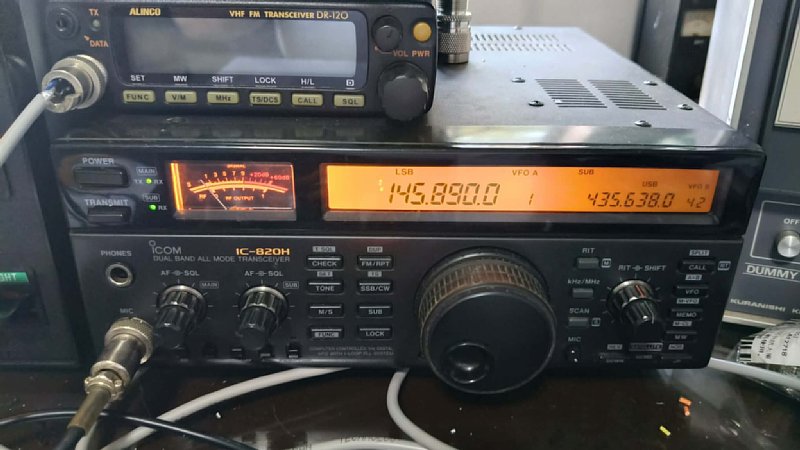 |
||||||||||||||||||||||||||||||||
| To investigate the problem, I pulled out my HP 8656B RF Signal Generator, which I had bought second-hand 17 years ago. The HP 8656B is a synthesizer-based RF signal generator introduced around 1986, making it about 40 years old today. My first impression was, "Wow... it's huge and heavy!" It weighs approximately 15 kg.
As expected from HP, the instrument powered up perfectly. The LED display lit normally, and there were no unusual noises, strange smells, or signs of overheating. It started up flawlessly, despite being a 40-year-old piece of test equipment. 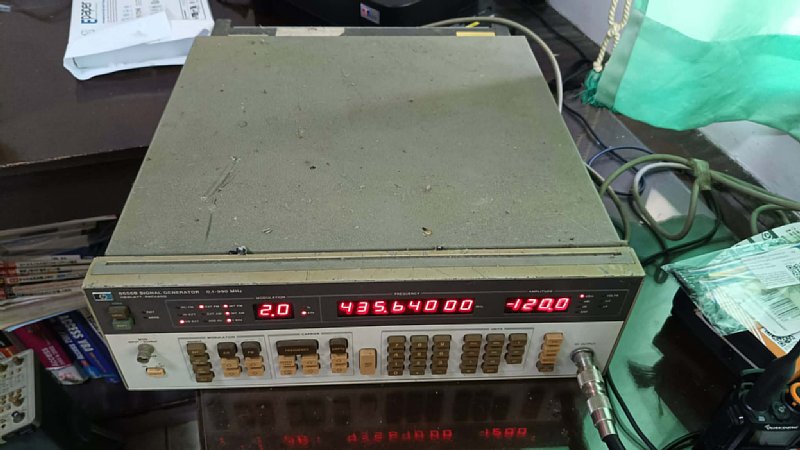 |
||||||||||||||||||||||||||||||||
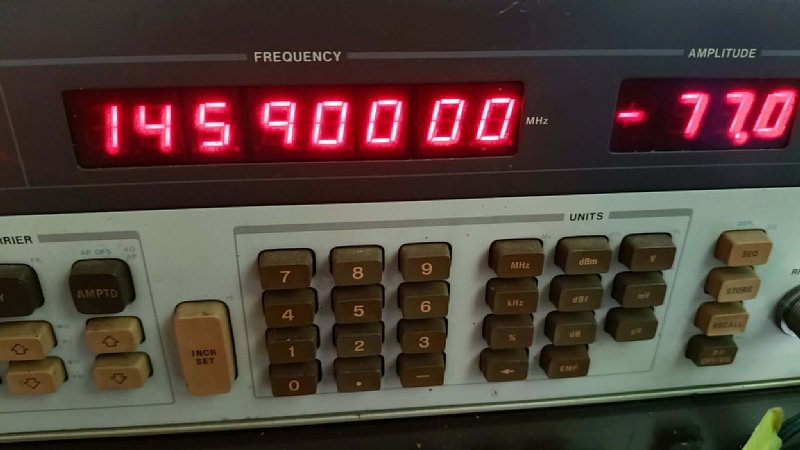
First, we measured the reception sensitivity using VHF.
 |
||||||||||||||||||||||||||||||||
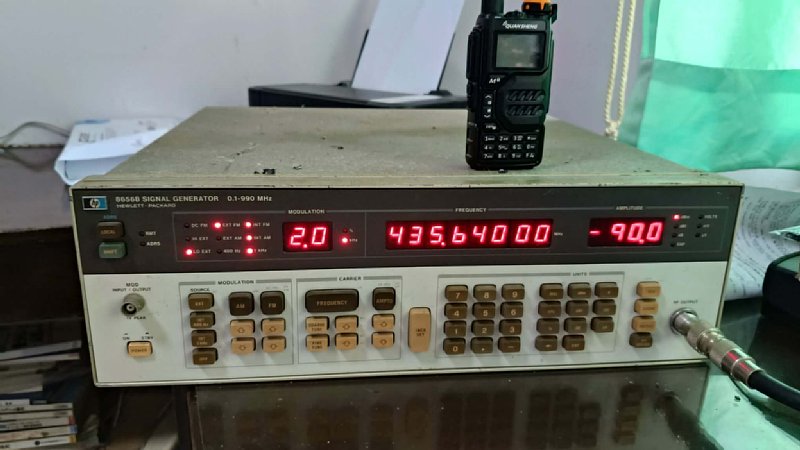
Next, we will measure the reception sensitivity of UHF.
 |
||||||||||||||||||||||||||||||||
| The measurements showed no significant problems with the VHF or UHF receiver sensitivity of the IC-820H. The coaxial feed line consists of 20 meters of LMR-400 and 4 meters of LMR-240, with a total loss of approximately 2 dB at 435 MHz. The measured SWR during transmission was 1.2, indicating that both the feed line and antenna system are in good condition. One possible improvement would be to install a mast-mounted receive preamplifier. The ideal choice would be the genuine ICOM AG-35, but it has long been discontinued and is now difficult to obtain. When one does appear on the used market or at auction, it usually sells for a high price. Even without a preamplifier, I have successfully completed many QSOs through RS-44, demonstrating that the current system already provides good practical performance. If I am able to obtain an AG-35 or a similar low-noise preamplifier in the future, I would like to evaluate how much it improves the reception of weak satellite signals. 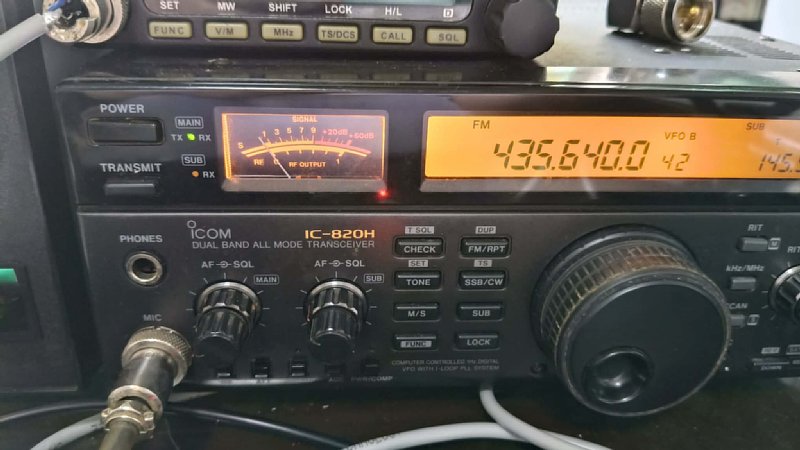 |
||||||||||||||||||||||||||||||||
| August 2, 2026. August 16, 2026. |